Ferde Grofé
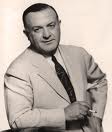 Born Ferdinand Rudolph von Grofe, in New York City, Grofé came by his extensive musical interests naturally. Of French Huguenot extraction, his family had four generations of classical musicians. His father, Emil von Grofé, was a baritone who sang mainly light opera; his mother, Elsa Johanna Bierlich von Grofé, a professional cellist, was also a versatile music teacher who taught Ferde to play the violin and piano. Elsa's father, Bernardt Bierlich, was a cellist in the Metropolitan Opera Orchestra in New York and Elsa's brother, Julius Bierlich, was first violinist and concertmaster of the Los Angeles Symphony.
Musical education
Ferde's father died in 1899, after which his mother took Ferde abroad to study piano, viola and composition in Leipzig, Germany. Ferde became proficient on a wide range of instruments including piano (his favored instrument), violin, viola (he became a violist in the LA Symphony), baritone horn, alto horn and cornet. This command of musical instruments and composition gave Ferde the foundation to become first an arranger of other composers' music and then a composer in his own right.
Grofé left home at age 14 and variously worked as a milkman, truck driver, usher, newsboy, elevator operator, helper in a book bindery, iron factory worker, and as a piano player in a bar for two dollars a night and as an accompanist. He continued studying piano and violin. When he was 15 he was performing with dance bands. He also played the alto horn in brass bands. He was 17 when he wrote his first commissioned work.
Arranger for Paul Whiteman
Beginning about 1920, he played the jazz piano with the Paul Whiteman orchestra. He served as Whiteman's chief arranger from 1920-1932. He made hundreds of arrangements of popular songs, Broadway show music, and tunes of all types for Whiteman.
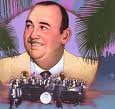 Grofé's most memorable arrangement is that of George Gershwin's Rhapsody in Blue, which established Grofé's reputation among jazz musicians. Grofé took what Gershwin had written for two pianos and orchestrated it for Whiteman's jazz orchestra. He transformed Gershwin's musical canvas with the colors and many of the creative touches for which it is so well known. He went on to create two more arrangements of the piece in later years. Grofé's 1942 orchestration for full orchestra of Rhapsody in Blue is the one most frequently heard today. In 1928, George Gershwin wrote a letter to ASCAP complaining that Grofé had listed himself as the composer of Rhapsody in Blue. In spite of this misunderstanding, Grofé served as one of the pallbearers at Gershwin's funeral in 1937.
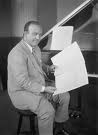
In 1932, The New York Times called Grofé "the Prime Minister of Jazz". This was an oblique reference to the fact that Whiteman was widely called "King of Jazz", especially after the appearance of the 1930 film of that name which featured Whiteman's music.
Due to Grofé's ubiquity in arranging large-scale musical works and a perceived paucity of American achievements in serious music, the German conductor Wilhelm Furtwängler complained that "America has no composers, only arrangers."
During this time, Grofé also recorded piano rolls for the American Piano Company (Ampico) company in New York. These captured performances were embellished with additional notes after the initial recording took place to attempt to convey the thick lush nature of his orchestra's style. Hence the published rolls are marked "Played by Ferde Grofé (assisted)".
 Not everybody appreciated Grofé's flowery arrangements during this time. In a review of a Whiteman jazz concert in New York, one writer said the music was expected to be pleasing, and "it proved so when it was repeated last night, in spite of the excessive instrumentation of Ferde Grofé." A writer of a later generation said "the Grofé and Gould pieces were the essence of slick commercialism..."
Radio
Mardi Gras (from Mississippi Suite) was recorded in the radio transcription series Shilkret Novelties in 1931 and again by Nathaniel Shilkret in RCA Victor's transcription series His Majesty's Voice of the Air in 1932. On the Trail (from Grand Canyon Suite) was also recorded in the His Majesty's Voice of the Air transcriptions.
In 1943, he was a guest on Paul Whiteman Presents. During the 1930s, he was the orchestra leader on several radio programs, including Fred Allen's show and his own The Ferde Grofé Show. The "On the Trail" segment of Grand Canyon Suite was used for many years as the "musical signature" for radio programs sponsored by Philip Morris cigarettes, beginning with their 1933 program featuring Grofé and his orchestra. Jon Hendricks wrote lyrics for "On the Trail", and the song was recorded for Hendricks' album To Tell the Truth (1975).
Several times he conducted orchestral programs in New York's Carnegie Hall. In January 1933 the premiere of his Tabloid, an orchestral suite in 4 movements, was presented in Carnegie Hall. In 1937, he conducted a concert tribute to George Gershwin at Lewisohn Stadium. Turnout (20,223 people) was the largest in that stadium's history.
In 1934, Grofé announced that he was working on an opera, to be based on the Edgar Allan Poe story "The Fall of the House of Usher".
All of the midi files on the net have been cut WAY back to about
1/10th the original length. Features such as stereo and other
effects have been stripped out. These are snips of the originals.
Available as midi files- Piano Sheet Music - .pdf files, CD or
on tape.
For A Complete list of midi files click here
To order anything, Please click
HERE
midi Musette (Piano Solo)
mp3 Ode To Freedom (midi orchestraed - my synths)
midi Preview From
"Hollywood Suite"